Now Reading: Anthony Albanese: Biography, Political Career and Leadership of Australia
-
01
Anthony Albanese: Biography, Political Career and Leadership of Australia
Anthony Albanese: Biography, Political Career and Leadership of Australia

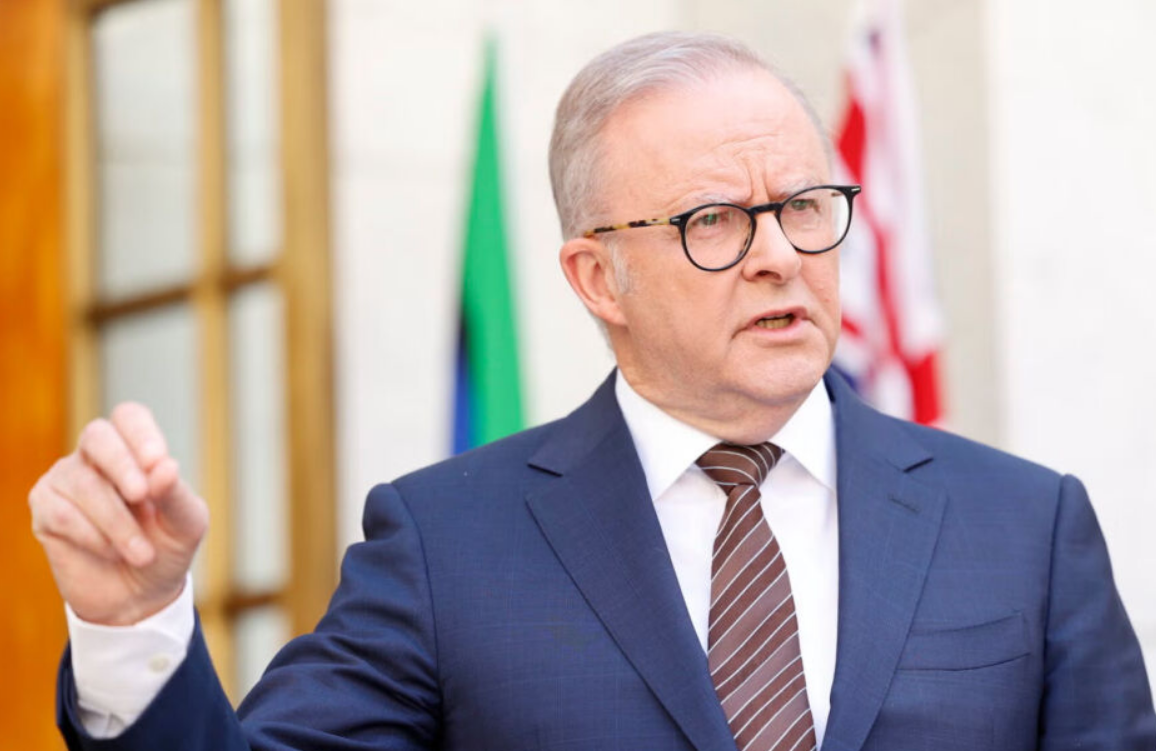
Anthony Albanese is one of the most prominent figures in contemporary Australian politics. A longtime member of the Australian Labor Party, he rose from a working-class childhood in Sydney to become the country’s 31st Prime Minister. First elected to federal parliament in 1996, Albanese spent decades building a political career that included senior ministerial positions, the deputy prime ministership, leadership of the Labor Party and ultimately the country’s highest political office.
Albanese became Prime Minister on 23 May 2022 after Labor defeated the Coalition government. His political story did not end with that victory. Labor secured another term at the 2025 federal election, allowing Albanese to continue leading Australia through a period marked by cost-of-living pressures, housing challenges, geopolitical uncertainty, technological change and an increasingly complicated international security environment. As of September 2026, he remains Prime Minister of Australia.
Early life in Sydney
Anthony Norman Albanese was born on 2 March 1963 in Sydney, New South Wales. His upbringing has become an important part of his political identity. He was raised by his mother, Maryanne, in public housing in Sydney, and the family lived on her disability pension.
Albanese has frequently connected these childhood experiences with his political philosophy. According to his official biography, seeing the challenges his mother faced gave him an early understanding of the role government programs can play in improving people’s lives.
His background was considerably different from that of many politicians who enter parliament after careers in law, business or professional political networks. Albanese has consistently emphasized his working-class roots, presenting his own life as an example of the opportunities that education, public services and social mobility can provide.
This personal history later became central to his political message: government should help create circumstances in which a person’s opportunities are not determined entirely by the family or economic conditions into which they are born.
Education and early interest in politics
Albanese attended St Mary’s Cathedral College in Sydney before studying economics at the University of Sydney. His university years strengthened an interest in politics that had developed when he was young.
He became involved with the Australian Labor Party and particularly its New South Wales organization. Rather than moving immediately into elected office, he spent years working within the Labor movement and developing an understanding of party organization and public policy.
These experiences provided him with an extensive political network and a detailed understanding of parliamentary politics before he became an MP himself.
His political identity was strongly connected to Sydney’s inner west, an area characterized by a combination of traditional working-class communities and increasingly diverse urban populations. That connection would remain important throughout his parliamentary career.
Entering the Australian Parliament
Anthony Albanese was first elected to the Australian House of Representatives in 1996 as the member for Grayndler, a federal electorate in Sydney’s inner west.
It was a difficult moment for Labor nationally. The 1996 election ended more than a decade of Labor government and brought John Howard and the Liberal-National Coalition to power.
Albanese therefore began his federal career in opposition rather than government. The experience gave him time to develop parliamentary skills and gradually assume greater responsibilities within the Labor Party.
His long association with Grayndler became one of the defining characteristics of his career. Even after becoming a senior cabinet minister, opposition leader and eventually prime minister, he remained closely identified with his Sydney electorate. His official biography continues to highlight that he first entered parliament as the member for Grayndler in 1996.
Rise through the Labor Party
During Labor’s years in opposition, Albanese steadily moved through the parliamentary ranks.
He became known as an effective political operator with a strong understanding of parliamentary procedure. Unlike politicians whose public profiles are built primarily through major speeches or media appearances, much of Albanese’s early influence came from his ability to negotiate, organize and work within parliament.
His career accelerated after Labor returned to government under Kevin Rudd in 2007.
Albanese became Minister for Infrastructure and Transport and Leader of the House. Infrastructure would become one of the policy areas most closely associated with him.
His official prime ministerial biography credits his ministerial work with major road and rail projects and his later communications responsibilities with work associated with Australia’s National Broadband Network.
Infrastructure and economic development
Albanese’s period as infrastructure minister helped establish his reputation as a politician interested in large-scale, long-term investment.
Roads, railways, ports and public transport are not simply construction projects. Governments frequently view infrastructure as an economic tool capable of improving productivity, connecting regional communities and supporting population growth.
Albanese argued strongly for greater Commonwealth involvement in infrastructure planning and investment. His approach emphasized cooperation between different levels of government as well as consultation with businesses and local communities.
The experience also shaped his later approach as prime minister. Infrastructure, manufacturing capacity, energy networks and housing supply have remained significant parts of the economic agenda pursued by his governments.
The turbulent Rudd-Gillard years
The Labor governments between 2007 and 2013 were marked not only by significant policy reforms but also by intense internal leadership conflict.
Kevin Rudd was replaced as prime minister by Julia Gillard in 2010. Rudd later returned to the leadership in 2013 after defeating Gillard in another party-room contest.
Albanese occupied an unusual position during this period. He was a senior Labor figure who maintained relationships across different parts of the party during an exceptionally divisive internal conflict.
When Rudd returned to the prime ministership in June 2013, Albanese became Deputy Prime Minister of Australia.
The position represented the highest point of his political career up to that stage, although it lasted only a matter of months. Labor lost the September 2013 federal election to the Coalition led by Tony Abbott.
Albanese consequently returned to opposition.
Years in opposition
Labor’s 2013 defeat began another long period outside government.
Albanese contested the Labor leadership following the election but lost to Bill Shorten. Rather than leaving frontline politics, he remained a senior member of Labor’s parliamentary team.
Over the following six years, he held important opposition portfolios and continued developing a national profile.
This period ultimately proved crucial. Political careers are often shaped as much by defeats as victories, and Albanese demonstrated an ability to remain relevant through repeated changes in Australia’s political environment.
When Labor unexpectedly lost the 2019 federal election, Bill Shorten stepped down as leader. Albanese then stood for the leadership and was elected unopposed as leader of the Australian Labor Party.
After more than two decades in parliament, he had finally become leader of his party.
Becoming Labor leader
Taking over Labor in 2019 presented significant challenges.
The party had entered that election expecting a strong chance of victory but instead suffered a painful defeat. Albanese therefore inherited an organization that needed to reconsider both its electoral strategy and the way it communicated its policies to voters.
His leadership style differed from that of some of his predecessors. He generally attempted to emphasize stability and pragmatism rather than dramatic ideological change.
The COVID-19 pandemic soon transformed Australian politics. Albanese spent much of his first term as opposition leader responding to an unprecedented public-health and economic crisis while attempting to establish himself as a credible alternative prime minister.
By the time Australians returned to the polls in 2022, the Coalition had governed federally for almost nine years.
Albanese presented Labor as offering political renewal while seeking to avoid an excessively ambitious platform that could expose the party to attacks similar to those it had faced in 2019.
The strategy succeeded.
Becoming Australia’s 31st Prime Minister
At the federal election of 21 May 2022, Labor defeated the Coalition government led by Scott Morrison.
Two days later, on 23 May, Anthony Albanese was sworn in as Australia’s 31st Prime Minister.
His rise represented an extraordinary personal journey. The child raised by a single mother in public housing had become the head of the Australian government.
Almost immediately after being sworn in, Albanese travelled internationally to participate in a Quad leaders’ meeting in Tokyo. The timing illustrated how quickly a new prime minister must transition from domestic campaigning to international diplomacy.
His government inherited major challenges, including inflation, rising living costs, housing affordability, climate and energy policy, relations with China, defence policy and Australia’s position in an increasingly competitive Indo-Pacific region.
The first Albanese government
The first Albanese government attempted to distinguish itself from its Coalition predecessors in several important areas.
Climate policy was one major example. The government increased Australia’s emissions-reduction ambitions and promoted greater investment in renewable energy while arguing that the transition could create new industries and employment.
Industrial relations also became an important part of Labor’s domestic agenda. The government introduced reforms concerning workplace rights, wages and employment conditions.
Healthcare remained another central Labor priority. Medicare has deep symbolic importance within the party, and Albanese repeatedly positioned investment in healthcare as part of a broader commitment to economic security.
At the same time, inflation and cost-of-living pressures created significant political difficulties. Rising mortgage payments, rents, food prices and energy costs meant that household finances became one of the dominant issues facing the government.
These pressures would continue into Albanese’s second term.
The Indigenous Voice referendum
One of the most consequential political events of Albanese’s first term was the 2023 referendum on an Aboriginal and Torres Strait Islander Voice to Parliament.
The proposal sought constitutional recognition of Indigenous Australians through the establishment of an advisory body able to make representations to parliament and the executive government on matters affecting Aboriginal and Torres Strait Islander peoples.
Albanese strongly supported the proposal and invested substantial political capital in the Yes campaign.
Australians rejected the constitutional amendment in October 2023.
The result represented a major political setback for the government and triggered extensive debate over reconciliation, constitutional recognition and the future direction of Indigenous policy.
The government subsequently continued pursuing the existing Closing the Gap framework. In February 2026, it announced further investments in areas including remote employment, housing, health, education and food security while working with First Nations partners.
Winning a second term
A crucial moment in Albanese’s political career came at the 2025 federal election, when Labor secured another term in government.
Winning re-election transformed his premiership. He was no longer simply the Labor leader who had ended almost nine years of Coalition government; voters had given his government another opportunity to pursue its agenda.
The second term placed particular emphasis on household finances, housing, healthcare, productivity and economic reform.
By August 2026, Albanese had passed Paul Keating in length of service and become the fourth-longest-serving Labor prime minister in Australian history. In an interview marking the milestone, he emphasized that he viewed remaining in office as an opportunity to continue making policy changes rather than simply as a personal achievement.
Cost of living and taxation
Economic pressure on households has remained one of the defining political challenges of Albanese’s premiership.
His government has responded with tax reductions and other measures designed to increase disposable income. From 1 July 2026, another round of tax cuts took effect, alongside the expansion of paid parental leave to six months and additional measures involving Medicare and hospitals. The government said more than 14 million taxpayers would benefit from the July tax changes.
The 2026 federal budget also placed significant emphasis on resilience and structural economic reform. It included measures involving taxation, housing, productivity and business investment while responding to additional economic pressure associated with international instability.
Albanese’s economic argument combines traditional Labor concerns about wages and public services with an effort to portray the government as supportive of private investment and business development.
The government announced a major tax reform package in May 2026 that included tax relief for workers, measures aimed at assisting first-home buyers and changes intended to encourage business investment.
Housing affordability
Housing has become one of Australia’s most difficult domestic policy problems.
Rapid population growth in major cities, insufficient housing supply, construction constraints, high property prices and rising rents have combined to make home ownership increasingly difficult for younger Australians.
For Albanese, the issue has both economic and political importance. Labor has attempted to increase housing construction while providing assistance to first-home buyers and encouraging additional private investment.
By 2026, the government acknowledged that additional measures were required. Albanese argued publicly that Australians’ aspiration to own a home remained legitimate and that governments could not simply accept younger generations being permanently excluded from ownership.
Housing policy therefore increasingly became connected with broader debates over taxation, planning, infrastructure, migration and intergenerational inequality.
Medicare and social policy
Healthcare occupies a particularly important place in Labor’s political identity, and Albanese has repeatedly made strengthening Medicare part of his government’s domestic agenda.
The 2026 measures included further Medicare investment and funding intended to make Urgent Care Clinics permanent. Paid parental leave was also expanded to a full six months from July 2026.
These policies reflect Albanese’s broader argument that economic policy should be judged not solely through indicators such as GDP but also through the security experienced by households.
His childhood experiences have frequently appeared in this context. The story of being raised by a single mother receiving a disability pension provides a personal connection to his support for public healthcare, social security and government assistance.
Climate change and the energy transition
Climate and energy policy has been another defining area of the Albanese governments.
Australia possesses enormous renewable-energy resources but has historically also been one of the world’s major fossil-fuel exporters. Managing the transition therefore involves difficult economic, environmental and political trade-offs.
The government has sought to expand renewable generation, modernize electricity infrastructure and encourage new manufacturing industries associated with the energy transition.
By 2026, energy policy had become increasingly connected with economic sovereignty and resilience. Albanese’s government emphasized domestic manufacturing capacity, more secure supply chains and the Future Made in Australia agenda as part of its longer-term economic strategy.
Global instability also highlighted Australia’s dependence on imported liquid fuels. The 2026 budget included a $14.8 billion package intended to strengthen fuel security, increase resilience and reduce vulnerability to international supply disruptions.
Artificial intelligence and technological change
Technology policy has become increasingly prominent during Albanese’s second term.
Artificial intelligence presents Australia with both economic opportunities and regulatory challenges. The growth of large data centres, for example, creates investment and productivity opportunities while also raising questions about electricity, water, land use and infrastructure.
In August 2026, Australia’s National Cabinet agreed to work toward nationally consistent AI laws. The federal government plans legislation establishing minimum requirements for large data centres, with standards addressing energy, water and land-use impacts as well as skills and training.
The initiative illustrates how Albanese’s second-term agenda has expanded beyond traditional Labor policy areas into questions about technological sovereignty and the structure of the future economy.
Foreign policy and the Indo-Pacific
As prime minister, Albanese has placed considerable emphasis on Australia’s relationships in the Indo-Pacific.
The United States remains Australia’s principal strategic ally, while relations with Japan, India, Indonesia and Pacific nations have become increasingly important.
Australia has continued participating in the Quad alongside the United States, India and Japan and has maintained the AUKUS security partnership with the United States and United Kingdom.
In September 2026, Albanese’s government marked the 75th anniversary of ANZUS, describing the alliance with the United States as a continuing foundation of Australia’s security and regional strategy.
At the same time, his government has emphasized stronger ties with Pacific countries rather than focusing exclusively on major powers.
In June 2026, Australia and Vanuatu signed the Nakamal Agreement, which Albanese described as a significant new framework for the relationship between the two countries.
Australia and Papua New Guinea
Australia’s relationship with Papua New Guinea has acquired particular strategic importance under Albanese.
In July 2026, Albanese and Papua New Guinea Prime Minister James Marape formally brought the Pukpuk Treaty into force. Albanese described it as Australia’s first new alliance since 1951.
The development reflected a wider Australian effort to deepen defence and security relationships with Pacific neighbours at a time of increasing strategic competition in the region.
Albanese has generally attempted to frame Australia’s Pacific policy around partnership rather than simply geopolitical competition. Climate change, labour mobility, economic development and security cooperation all form part of this approach.
Relations with China
China represents one of the most complicated foreign-policy challenges facing any contemporary Australian prime minister.
China is a crucial trading partner for Australia, particularly for resources and agricultural exports, but strategic disagreements have intensified over security, foreign interference, regional influence and China’s growing military power.
When Albanese entered office, bilateral relations had deteriorated significantly during the previous Coalition government.
His government pursued a strategy of stabilizing diplomatic relations without abandoning Australia’s security partnerships with the United States and other regional democracies.
This approach has required balancing economic interests with national-security considerations. Rather than presenting engagement and deterrence as mutually exclusive, the Albanese government has generally sought to maintain trade and dialogue while strengthening Australia’s defence capabilities and alliances.
Leadership style
Albanese’s political style is generally more pragmatic than theatrical.
His supporters describe him as an experienced negotiator capable of working with people across ideological and institutional boundaries. His official biography similarly emphasizes his record of bringing businesses, communities and other stakeholders together during his previous ministerial career.
His critics, however, have sometimes argued that this cautious style can make his political direction appear insufficiently decisive, particularly when governments face rapidly changing economic or international circumstances.
Both interpretations point toward the same fundamental characteristic: Albanese is primarily a politician shaped by decades of parliamentary experience rather than by a sudden outsider movement.
His long career has taught him the importance of negotiation, party discipline and incremental political progress.
Public image
Albanese has cultivated a public identity that combines the authority of the prime ministership with references to his ordinary upbringing and personal interests.
His nickname, “Albo,” has become widely recognized in Australia. He has spoken openly about his love of music and maintains a less formal cultural image than many traditional political leaders.
Yet his strongest personal narrative remains his upbringing.
The story of a boy raised in public housing becoming prime minister provides an unusually powerful political biography, particularly for a Labor leader whose party traditionally emphasizes social mobility and equality of opportunity.
Albanese himself has repeatedly connected his mother’s aspirations for him with the type of Australia he says he wants to create for future generations.
Anthony Albanese in 2026
By 2026, Albanese’s premiership had entered a more mature stage.
His government was simultaneously dealing with domestic reform and an unusually uncertain global environment. The 2026 economic agenda emphasized productivity, tax reform, housing, manufacturing, fuel security, technological investment and stronger supply chains.
National security issues had also broadened. In August 2026, National Cabinet discussed artificial-intelligence regulation, gender-based violence, firearm reform, fuel security and other emerging national challenges.
This combination demonstrates how dramatically the responsibilities of an Australian prime minister have expanded. Traditional questions involving healthcare, taxation and infrastructure now sit alongside AI governance, data-centre infrastructure, energy sovereignty and rapidly changing strategic relationships.
For Albanese, the challenge is to demonstrate that a government built around traditional Labor principles can adapt those principles to this changing environment.
Political achievements and challenges
Albanese’s political achievements are substantial even before considering how the remainder of his premiership unfolds.
He became Labor leader after the party’s unexpected 2019 defeat, returned Labor to government in 2022 and subsequently secured another term. His government has pursued reforms involving climate policy, wages, healthcare, taxation, housing and industrial development.
Yet his record also includes significant political setbacks and unresolved problems.
The defeat of the Voice referendum was one of the clearest setbacks of his first term. Housing affordability remains extremely difficult for many Australians. Cost-of-living pressures have continued to test the government’s economic agenda, while the energy transition requires balancing emissions reduction, reliability and affordability.
Internationally, Australia must navigate a more unstable security environment while maintaining its economic relationships in Asia.
These challenges mean Albanese’s ultimate political legacy remains unfinished.
Place in Australian political history
Anthony Albanese’s personal journey gives him a distinctive position in Australia’s political history.
He entered parliament in 1996 and spent more than a quarter-century working through opposition, government, cabinet, the deputy prime ministership and party leadership before becoming prime minister.
By August 2026, he had overtaken Paul Keating in length of service as prime minister and become the fourth-longest-serving Labor prime minister in Australian history.
Longevity alone, however, does not determine a prime minister’s historical importance. The larger question is whether the reforms pursued during Albanese’s governments produce lasting changes in Australia’s economy, energy system, social institutions and international position.
His second term provides an opportunity to answer that question.
The continuing story of Anthony Albanese
Anthony Albanese’s career is ultimately a story of political persistence.
He did not become prime minister through a rapid rise. He spent decades in parliament, survived leadership battles, experienced electoral defeats and served through periods of intense instability within his own party.
That long path helps explain his approach to government. Albanese tends to emphasize negotiation, gradual reform and institutional stability rather than political disruption for its own sake.
His biography also gives his leadership a powerful symbolic dimension. The child raised by a single mother in Sydney public housing ultimately became Australia’s 31st Prime Minister. That personal journey remains central to the way he explains his political beliefs and his vision of social mobility.
As of September 2026, his political story is still being written. Australia faces significant questions about housing, productivity, climate and energy, artificial intelligence, defence, economic resilience and its place in the Indo-Pacific. Albanese’s response to these challenges will ultimately determine how his premiership is remembered.
What is already clear is that Anthony Albanese has travelled one of the longest and most consequential paths in contemporary Australian politics—from a council house in Sydney to the leadership of the nation.